Tuesday, June 26, 2012

San Juans and the Central Governor


Highlights of the past week:

1. Cheering Bethany on to win another epic race, finishing the San Juan Solstice 50m in 9:58, just off the course record.

2. Running above 12,000 feet on a daily basis.

3. Tetherball with Ada.

4. Time with the Eldridges in Montrose and at the Telluride Bluegrass Festival.

5. Family camping.

Running in the San Juans is humbling.  The sheer vertical relief, the scale, the elevation: all of these combine to make one feel pretty small.  Mountain travel above 12,000 feet is a different beast: grades that are eminently runnable on lower elevation trail become hypoxia-inducing, vision-constricting stumble-fests.   After a week of camping and running in Ouray, Silverton, and Telluride I felt pretty spent- and only partly due to the limited sleep afforded by a 21-month old completely out of her routine.  Spent yes, but also inspired:  It will be exciting to come back out here in only a few weeks to pace Jared Campbell at Hardrock and have a rare inside glimpse of the front end of this epic race.  

Running at elevation is a good test of Noakes' Central Governor Hypothesis of fatigue in endurance sport.  In a nutshell, this is the notion that exercise capacity is limited not by mechanical properties of muscle and tendon, nor by the pure efficiency of aerobic metabolism, but is regulated in top-down fashion by the brain which dictates how much muscle is devoted to the task at hand so as to preserve the integrity of the organism in extremis.  Monitoring my heart rates while climbing I was surprised to see numbers only in the 150s when my perceived effort level was much higher.  Presumably my brain sensed less available oxygen and correspondingly downregulated muscle recruitment patterns so as to avoid the possibility of bodily damage.   The old adage that running is 99% mental is true in more ways than one... 


Goblin Valley

Island Lake

Tetherball!
Ice Lake, Fuller Lake

Sleepless camping

The precipitous Bear Creek trail

Engineer Pass

Bethany, mile 16 of SJS en route to a convincing victory. 

Post race, cheesy motel decor.

Sunday, June 10, 2012

P50

Over Memorial Day Weekend I travelled to Pocatello for the Pocatello 50: this year as an aid station volunteer rather than a competitor.  This race- put on by Jared Campbell, Ryan McDermott, and this year Luke Nelson- has been on the calendar over the last several years for its combination of spectacular and gnarly terrain, festive and laid back atmosphere, and proximity to SLC.  The four years since its inception have showcased a wide range of conditions, from the hypothermia-inducing white-out of 2 years ago to a record snowfall year last year forcing a course re-route, to the mid 80 degree temps this year.  The Pocatello 50 is truly a classy event- this will surely continue next year as Luke Nelson takes the reins of race-directorship.

I had a great time taking in the scene from the Mink Creek Aid Station (mile 34) where courage and carnage were present in equal measure as the day heated up.  There were some inspiring performances by a crew of local athletes, including but not limited to Greg Norrander's and Matt Hart's impressive runs, Andy Dorais' 50 mile debut, Karl Meltzer and Jay Aldous in a sprint finish, Mindy Campbell taking home 3rd place for women, Jason Berry heading out for leg 3 despite clearly being in the early stages of heat exhaustion (he survived), and Peter Lindgren practicing the tenets of good friendship and good medicine in shepherding in a delirious Christian Johnson.  Nice to be a part of this.

Here's some photos as well as video footage I compiled from the last 6 months of running:


                                                                                             Mink Creek Aid Station, prior to the deluge of  runners.

Intrepid race directors: Ryan and Jared

West Face of Grandeur.
Bowman Fork

Mt. Raymond

Coming off Raymond.


Monday, May 28, 2012

Back in Action


I've continued to ramp up the mountain running which has been good for the soul and, so far, good for the foot as well.  Some nice adventures over this past week, including a trip to Zion.  I was able to hold back and refrain from doing the Trans-Zion route with Bethany but did get out for some nice 2 hour runs of my own.  Still need to be cautious for a couple weeks.

Butler Fork

Butler Fork

Mt. Raymond

On Gobblers


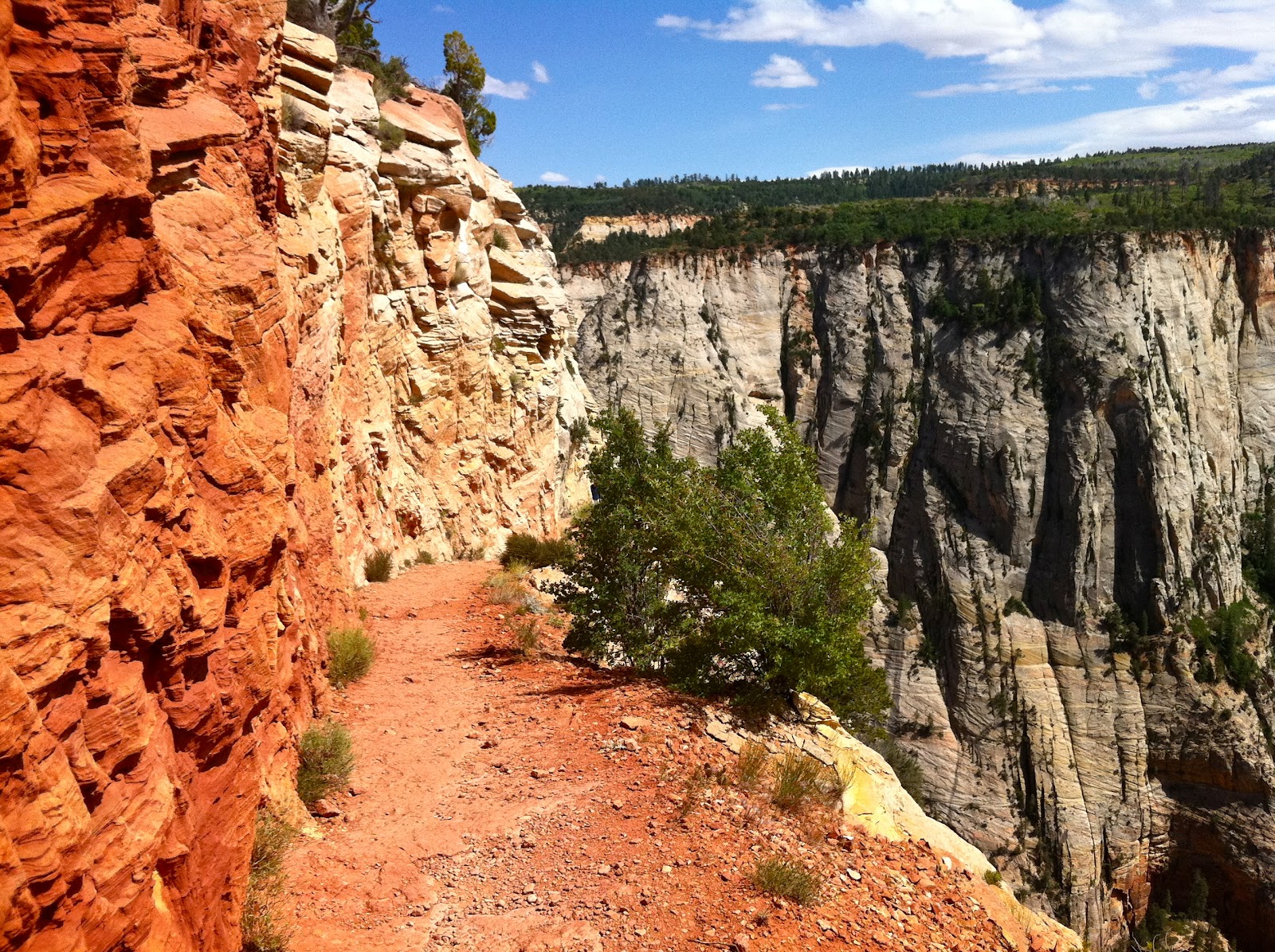
East Rim

Trans-Zion, at Lava Point.  Helfer, Zach, Kate, Meredith, Bethany.  Me doing support.


Angel's Landing

Thursday, May 10, 2012

Some Pool Running Tips

I've been trying to get Bethany to write a race report on the Miwok 100k but dammit, she's just not narcissistic enough to comply.  It should be noted that she was 2nd woman overall in the Miwok 100k in 10:49.  Apart from some grotesque poison oak on her legs she looked fresh upon returning home the next day.  Even though I can't give you a gripping race report from the true athlete of the household I can offer you something nearly as captivating: some pool running tips.  


As I now consider myself an elite pool runner, here is some accumulated wisdom in the off-chance that another injured trail runner might be deranged enough to benefit from it:


1) Use a flotation belt and go to the deep end of the pool.  It becomes too difficult to maintain a semblance of a running stride without the belt.  Even so, your legs make more of a piston-ing action then a true running stride.  With the resistance of the water you definitely feel some cumulative fatigue in the hamstrings and hip flexors towards the end of the workout.


2) Intervals are your friend.  Pretty much every workout I've done has been interval based.  This is for several reasons: to break up the monotony as well as to ensure an adequate aerobic stimulus.  You have to work pretty hard to get your heart rate up.  Any given heart rate is 10% lower than an equivalent effort running on land.  For my intervals I would try to be in the 155-165bpm range depending on the length of the interval (max hr on land of 185, lactate threshold heart rate on land around 172).  I've done more high intensity work in the last 5 weeks than I've done since college.  It's because of this ability to maintain the intensity in a relatively specific fashion that studies have shown that runners can maintain VO2 max, lactate threshold, and running economy for 4-6 weeks with just pool running alone.


3) Limit the workout duration.  I initially had big goals of 2-3 hour pool sessions but the monotony is pretty hard to bear and it is tough to keep up the intensity.  I did a couple sessions of 90 minutes but eventually just focused on 1 hour workouts.  An hour of intervals can tucker you out just fine.


4)  Keep the recovery intervals short.  Your heart rate quickly drops after each work effort.  Recovery intervals shouldn't be longer than 1 minute.


5) If you are in it for the long haul (i.e. at least 6 weeks) it is helpful to have a waterproof ipod or some such device to listen to some tunes. 


6) Avoid the aqua-aerobics ladies.  Trust me on this one.  Get a pool schedule and figure out a way to get there in the hours they aren't there.  


Here are some sample workouts.  Some of these are taken from or adapted from Pete Pfitzinger's pool running schedule. 


1. 8-10 x 5 min intervals with 1 min recovery.


2. 10-16 x 2:30 intervals with :30 recovery.  Can do in sets of 5-6.


3. "The Kevin Sullivan Workout".  This is a workout that Kevin Sullivan- Canadian mile record holder- incorporated into his routine regularly in coming back from a sacral stress fracture in 2002: 
1 x 5 min / 1 min rec. / 2x4 min with 1 min rec. / 3 x 3 min with 30sec recovery / 4 x 2 min with 30 sec recovery / 5 x 1 min with 15 sec- 30 sec recovery / 6 x 30 sec with 15 sec recoveries


4. Ladders: 5/4/3/2/1/2/3/4/5 x 2 with 30 sec to 1 min recoveries


5. Pool lengths: repeats of 25 meters (takes approx. 1 min) all out with 30 sec recoveries.


6. Long Intervals: 2-3 x 15 minute intervals with 2-3 min recoveries.  


7.  Steady run: 1:30-2:00 steady.  Only did this a couple times.


Friday, May 4, 2012

Homo Erectus and the Alter-G

Injury rehab in the modern era is a very different thing than it was in the Pleistocene.  I would guess that 12,000 years ago I would be dead by now: my lame foot and I hapless victims of a cave lion, a woolly rhinoceros, a glyptodon; or less dramatically, fallen prey to starvation or exposure.  In contrast, in the 21st century if I chose to I could live my entire life hardly moving my limbs at all, these very real fears of our evolutionary past completely foreign and abstract.  While this state of affairs wreaks havoc on the coronary arteries, abdominal circumferences, and general existential authenticity of our species one nice side benefit is the availability of Alter-G treadmills.


These $75,000 NASA-designed treadmills use air pressure to allow one to select the percentage of body weight you want to run at.  If you want to feel what it's like running 10 lbs lighter you adjust the machine and let fly.  Or you can do what I've been doing over the past week and dial it down to an airy 25% of body weight to unload a fractured foot.  


Entering the contraption is no small feat.  You first slip on a skirt that looks like a white-water kayak skirt with leggings and then zip yourself into an airtight inflatable chamber, calibrating the machine then adjusting the relative air pressure to your liking.  I imagine running at 80% of body weight would be a relatively comfortable affair.  At 25% however, the vectors of force suspending you concentrate directly on your neoprene-encased groin.  I must have been a funny sight for the other gimpy patrons of the University of Utah Orthopedics Center Physical Therapy Dept: legs spinning wildly underneath me as my face vacillated between expressions of blissed-out gratification and wincing discomfort.


Today I ran for 30 minutes at 6min/mile pace. My heart rate hardly cracked 140.  Add to this an interval workout in the pool, a bike ride up Emigration and Big Mountain, some time with Ada, and an IPA and it was a pretty good day for this modern hominid.  


What does any of this have to do, you ask, with the specific aerobic, muscular, and metabolic demands of moving slowly and consistently over vast amounts of technical vertical terrain with cumulative eccentric muscle damage?  Probably very little.   But it's likely better than doing nothing.


In other news, Bethany races the Miwok 100k tomorrow.  Amazingly, in what must be a first, she actually read up on the course and her competition before the start.  I'll try and convince her to write a race report on this site when she gets home but I can't make any promises.


-Current maximum pullups: 20 (improvement of 4 in a month, weak sauce).
-Estimated total miles 'run' in the pool: 24


Sunday, April 15, 2012

Aquatic Antisocial

It's a bleary-eyed 6am as I hang my legs over the edge of the pool about to embark on my workout.  Today the schedule calls for 8 x 5 minute intervals of pool running with 1 min. recovery, bookended by a warmup and cool down.  I know that in order to complete this I'll need a good deal of mental resolve but I'm not quite there yet.  In the interest of hastening bone growth I've given up coffee and beer- both known retardants of osteocyte function.  This is no small feat as anyone who knows my consumption habits can attest and this morning I feel the unmistakable foggy shroud of the former, amplified by a short night of sleep.  


All week I've been coming to this pool with the singular goal of just getting it done.  I don't chat it up in the locker room, sit in the sauna with that hairy dude, or otherwise engage in any form of social contact.  I wear a heart rate monitor, a waterproof Ipod, and I'm in and out: all business.


Wearing this walking cast problematizes certain things.  For instance, the obligatory shower before entering the pool.  To do so I must first remove the boot (which has a wieldy outer shell), hop over to the shower, shower, put the boot back on, walk out to the pool, then take it off again to get in the water.  In my desire for efficiency I've taken to simply walking over to the showers and getting my hair wet as I hold my leg away from my body.  I'll rub some water on my chest so as to give the impression of having taken a full bath prior to entering the pool.  I then hurry over to an open lane and jump in before anyone accosts me.


15 min. warmup.  Once I'm in and going I'm glad to be here.  I'm even developing a fondness for this routine, despite myself.  I begin my intervals.  The effort feels surprisingly hard and I'm again reminded at how intense the work sessions must be to elevate my heart rate appropriately.  The 1 minute recoveries pass almost instantaneously.


I pee in the pool.


I can't help myself.  Just being in water makes me have to urinate, even if I emptied my bladder immediately before entering.  I slow my cadence imperceptibly but keep a look of stern concentration on my face so as to avoid detection.  The only evidence of my infraction is a small envelope of surprising heat for several seconds.


As I finish #6 I notice that they are pulling lane lines to prepare for the aqua-aerobics class.  My heart rate is 160- with the 10% rule I equate this to around 176, or right around lactate threshold.  I'm now without a lane to run in but I keep going, hugging the plastic barrier as the deep end slowly takes on the feel of a geriatric unit.  There are only 8 ladies in this class and a vast swath of aquamarine real estate to be had so I feel justified in hugging this barrier, well out of their slow-moving, age-spotted, telomerically-compromised grasp.


The instructor- about 20-  is energetically jumping up and down on the sidelines but the old ladies pay no heed.  They are clustered in 3 small social groups chatting avidly, the water lapping at the hair on the base of their neck so that it hangs down in dark gray tendrils.  They bob slowly up and down effortlessly, legs moving in distracted, desultory circles: giant floating bags of jelly encasing small skeletons of brittle, osteoporotic bones.  


I continue straining, a slight wheeze on my expiration now. 


There are two aerobics participants that seem uniquely uninvested in the class proceedings.  As I slowly make my way to and fro across the pool I note them coming closer and closer to my line, eventually planting themselves directly in my path, now full outliers from the rest of their group and with their backs to the instructor.  I make a large slow-motion arc around them as I complete my seventh interval.  This takes longer than you might expect- long enough in fact to catch more than one dirty look.  On my way back on the recovery interval one of them addresses me haughtily: "this area of the pool is for deep water aerobics only.  You'll have to use one of those lanes."  She gestures with her head.  Those lanes are 5 feet deep or shallower, the suggestion untenable for my lanky body.  I say nothing, smile benignly, and begin my last interval, again sweeping wide around their pale, motionless bodies, distorted and condensced as seen through the refracting surface of the water.


Keep focused.  I can feel my face and head sweating.  It is now getting light outside and there is a fresh dusting of snow on the peaks outside the window: Mt. Wire, Grandeur, Mt. Olympus- all my regular training routes.  A ray of sun beams across the pool lighting it on fire and for a moment I am blinded, suddenly transported outside onto a summit, the front range of the Wasatch spreading out before me in entropic waves.  It is momentary but glorious and I get goosebumps.  Out of the corner of my eye I see one of them, the woman who addressed me, move more aggressively than she has all class to get to the edge of the pool, water droplets flinging off her hair.  She pulls herself out and pads determinedly down the concrete length to the lifeguard.  There is vigorous gesticulating and pointing but I can't catch what is said.  Only 2 minutes left to go.  I spin around on the east end and churn my legs as fast as they will go over the final stretch, all hamstring and hip flexor.  Tag the wall and I'm done.  I pull myself up out of the water, hop over to the bench, take off the flotation belt, strap on my boot, and without looking back limp to the locker room, my boot making heavy, echoed thuds with each step.

Wednesday, April 11, 2012

A Change of Plans...

Bummer.  After nearly two weeks of mid-foot pain after the Antelope Island 50m I had an MRI this past Friday. 

Stress fracture of the lateral cuneiform, bone contusion on the calcaneus, peroneus longus tenosynovitis, and mild achilles tendinosis.

Of course the only real game changer in that set of diagnoses is the first one.  The stress fracture: bain of the runner's existence and inevitable harbinger of 6 weeks + of no running whatsoever and then a gradual reintroduction of stress to the bone.  The imaging gives clues to the likely etiology.  I had entered the race with a slight achilles injury which flared at about mile 12 or so, forcing me to alter my biomechanics and foot strike.  The rearrangement of my gait, compounded over the course of a fast 50 mile race (in the context of having done very little specific training for this type of running) provided an overload of stress on my foot resulting in breakdown.  Seems like a good hypothesis at least.

It's interesting how quickly so many things can shift.  Just days prior I had been pounding up and down Mt. Wire and Mt. Olympus, telling myself that my foot was indeed getting better and it was nothing to worry about, that the Zane Grey 50 was still in the cards for me in a couple weeks.  I disregarded the fact that every step brought on a wince and my foot hurt to touch.  Running hard involves in large part the ignoring of bodily distress signal, or at least the recasting of this signal in a different light.  I've run through plenty of injuries in the past (for better or worse) so wasn't thinking this one was going to be very different. Now, suddenly I had a broken bone, a heavy plastic walking cast, a crushing sense of disappointment, and a lot of time on my hands.  The stark, honest rupture of calcium hydroxylapatite matrix and some tough existential questions.

As I re-equilibrated over the weekend, lounging about, doing housechores and spending time with family, I thought to myself, baffled: "so this is what being a normal person is like."  It's amazing how differently a Saturday goes when you aren't spending 5 hours running.   I might actually be a productive person if I didn't spend such large amounts of time either in aerobic exertion or basking in the hazy, contented afterglow.

Yup, not that big a deal in the larger scheme of things.  But the sense of loss highlights the tenacity with which running entwines itself amidst one's meaning-making machinery.  There are other factors at play here to be sure that help explain the malaise: the fostered dependence on one's endogenous opioid system (the associated squirts of dopamine and the withdrawal thereof), habituation to routine and expectation, the social outlets afforded, competitive goals.  And there is this: running has become an inextricable part of me.  It is a reflection of who I am, my means of connection and exploration, a domain to test myself and grow, an expression of love. 

With cycling out of the question for now I've been trying to make friends again with the pool in all her chlorinated claustrophobia.  Water running is likely the most mind-numbingly boring activity of all time, surpassed perhaps only by swimming itself with its insular immersion, redundancy, awkwardness, and peculiar cadre of lycra-clad, large shouldered, strangely-non-athletic looking mammals who, for some bizarre reason, have forsaken the sublime mountains just outside the window in favor of this overcrowded cesspool of chloramine vapors.

In sum, it is mental training par excellance.

Without the same gravitational forces to overcome and because of the compressive forces of the water which increases venous return, to achieve any semblance of a workout pool running you need to hammer at what feels like significant intensity.  Even so, heart rates are around 10% lower for the same aerobic efforts.  The plus side is that without any eccentric muscular damage you can do intervals every day without risking injury.  And so it is: Monday- 10 x 90 sec. with 30 sec recovery, Tues - 6 x 2:30 with 30 sec recovery (interrupted by Masters Swim class, arg!), Wed- 12 x 2:30 with 30 sec recovery (to make up for Tuesday's poor showing).  I read an article about Paula Radcliffe destroying herself with marathon pool running sessions and vomiting on her way home as she came back from injury and have made this my new goal over the next 6 weeks.

I've also resumed doing pullups in earnest.  While this has little if any specific impact on maintaining running form it at least provides a handy outlet for short-term goals.  Having neglected my upper body for the better part of 4 years my lats and biceps are as flaccid as Claire Meuse's (my grandmother).  My inaugural showing resulted in a pitiful 15 pullups: a far cry from the legendary 5 sets of 10 pullups of 2008 , but at least it is a starting place.